What to Expect From an Inspection
Purchasing a home is one of the most significant investments a person will ever make, and a professional home inspection is among the most critical steps in the process. Whether buyers are acquiring a newly built property, a mid-century craftsman in East Austin, or a townhome in the Mueller neighborhood, understanding what happens during an inspection - and what comes after - equips them to move forward with confidence and clarity.
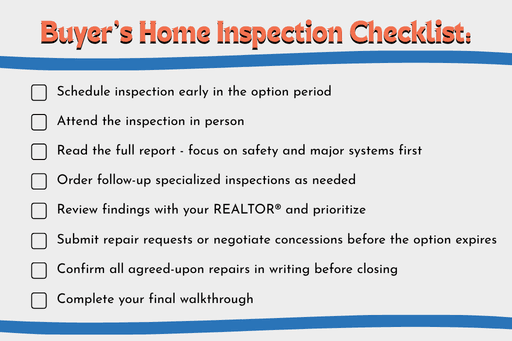
This guide walks through every phase of the home inspection process, from scheduling through post-inspection negotiations, so buyers know exactly what to expect and how to use the inspection to protect their investment.
A home inspection gives buyers the information they need to make one of the biggest financial decisions of their lives with their eyes wide open.
Step 1: Scheduling the Inspection
In Texas, the inspection period falls within what is known as the option period - a negotiated window (commonly 5–10 days) during which buyers have the unrestricted right to terminate the contract for any reason. Once a contract is executed, scheduling the inspection promptly is essential to allow sufficient time to review findings, pursue any follow-up specialized inspections, and negotiate with the seller if necessary.
Inspectors in Texas must be licensed by the Texas Real Estate Commission (TREC). Buyers should look for inspectors with E&O insurance, verifiable local experience, and strong client reviews. Mueller Residential Group maintains a trusted referral list for clients who need guidance choosing an inspector.
Step 2: What the Inspector Examines
A licensed inspector follows the TREC Standards of Practice, a defined framework establishing what must be examined and reported. A standard inspection covers the following:
Structural Components
The inspector evaluates the visible foundation, load-bearing walls, floors, and framing. In the Austin area, where expansive clay soils are common, foundation conditions receive particular attention.
Foundation - visible cracks, settling, or differential movement
Framing, load-bearing walls, floors, and ceilings
Interior walls for visible signs of structural stress or water intrusion
Roofing System
Roofing materials, condition, and estimated remaining useful life
Flashing, penetrations, soffits, fascia, and eaves
Gutters, downspouts, and surface drainage
Electrical Systems
The inspector evaluates the main electrical panel, visible wiring, outlets, switches, and GFCI protection throughout the property.
Service panel and circuit breakers
Grounding and GFCI protection near water sources
Visible wiring condition and code compliance
Plumbing Systems
Water heater - condition, age, and code compliance
Fixtures: sinks, toilets, tubs, and showers
Visible supply and drain lines
Water pressure, flow, and drainage efficiency
HVAC Systems
Heating and cooling systems are among the highest-cost items in a home. The inspector tests function, evaluates the condition of the air handler and condenser, and notes any age-related concerns.
Heating and cooling function and airflow
Condition of air handler and outdoor condenser unit
Ductwork, vents, and register distribution
Thermostat operation
Insulation and Ventilation
Attic insulation type and depth
Attic and crawl space ventilation adequacy
Vapor barriers where applicable
Doors, Windows, and Interior
Door and window operation and weather-sealing
Visible signs of water intrusion around window frames and exterior walls
Evidence of moisture, mold, or pest activity
Exterior and Site Drainage
Exterior cladding, siding, and trim condition
Driveways, walkways, patios, and decks
Grading - proper slope away from the foundation
Fencing, detached structures, and outbuildings
Built-In Appliances
If appliances convey with the property, the inspector will test their basic operation. For more on what stays with the home at closing, Mueller Residential Group's guide on what conveys provides a comprehensive breakdown.
The inspector's role is not to evaluate whether a home is worth buying - it's to provide an accurate, objective account of its condition at the time of inspection.
Step 3: Attending the Inspection
Buyers are strongly encouraged to attend the inspection. A standard residential inspection runs two to four hours, depending on the size and age of the property. Being present allows buyers to observe issues in context, ask questions directly, and leave with a meaningful understanding of the home beyond the written report.
The seller is not typically present during a buyer's inspection. Buyers should plan to dedicate this time fully to the process.
Step 4: Understanding the Inspection Report
Inspection reports are detailed documents - commonly 30 to 80+ pages - accompanied by photographs and narrative descriptions of every noted item. Buyers often receive the report within 24 hours of the inspection.
Mueller Residential Group advises clients to triage the report using the following framework:
Safety hazards - Immediate risks to occupants: improper electrical wiring, absent GFCI protection, gas-related concerns, or structural failures. These are the top priority.
Major systems - Roof, foundation, HVAC, plumbing, and electrical. Deficiencies here carry the highest potential repair costs and are typically the focus of negotiations.
Deferred maintenance - Items that have been neglected but are manageable: worn caulking, dripping faucets, minor surface damage.
Informational notes - Components nearing the end of their typical service life. Not immediate concerns, but worth planning for.
It is important to note that every home has inspection findings. The presence of items in a report is not cause for alarm - context, cost, and negotiability are what determine how buyers should respond.
Step 5: Specialized and Follow-Up Inspections
The general inspection establishes a baseline. Depending on the property's age, condition, or specific findings, additional evaluations may be warranted:
Sewer scope - A camera inspection of the underground drain line. Recommended for most Austin-area homes, particularly those over 15–20 years in age.
Foundation evaluation by a licensed structural engineer - Indicated when foundation concerns are noted in the general inspection.
Mold assessment - Air quality testing and scope identification when moisture or mold evidence is present. Mueller Residential Group's resource Powerful Tips for Mold Prevention That Actually Work provides additional context.
Wood-destroying insect (WDI) inspection - Evaluates for termite activity, carpenter ants, and pest-related structural damage - particularly relevant in Central Texas.
Pool and spa inspection - A dedicated assessment of pool equipment, structural integrity, and safety features.
Chimney inspection - Evaluation of firebox, flue, and chimney structure for properties with fireplaces.
Step 6: Consulting With Your Agent
Once all inspection reports have been reviewed, Mueller Residential Group works with each client to identify what findings warrant negotiation, what can reasonably be absorbed, and - in rare circumstances - what constitutes a material concern significant enough to warrant terminating the contract.
Experience in the local Austin market matters here. A flagged item in a property priced to reflect its condition is a different conversation than the same item in a home marketed as turnkey. Our agents provide context-driven guidance so clients can make sound, unemotional decisions.
For a broader look at how this process fits into the overall buying journey, Mueller Residential Group's First-Time Homebuyer's Guide offers a comprehensive overview from pre-approval through closing.
Step 7: Negotiating Repairs and Concessions
During the option period, buyers may request that the seller address specific items - through repairs, credits, or price adjustments. Sellers are not obligated to agree, and a negotiation typically follows. Mueller Residential Group structures these requests thoughtfully to maximize the likelihood of a productive outcome.
Repair requests - Asking the seller to complete specified repairs prior to closing. Best reserved for safety issues and major system deficiencies.
Seller concession / credit at closing - A dollar credit applied at closing allows the buyer to manage repairs independently after closing, often the more efficient approach.
Price reduction - May be appropriate when repair costs are substantial or the property requires significant work.
If negotiations are unsuccessful, buyers retain the right to terminate within the option period. The option fee is forfeited, but earnest money is returned according to the contract terms. Mueller Residential Group guides clients carefully through this window to ensure decisions are made deliberately.
Step 8: After Negotiations - Path to Closing
With inspection negotiations concluded, the transaction proceeds toward closing:
Appraisal - Lender-ordered valuation to confirm the property value supports the loan amount.
Repair verification - Documentation of completed repairs; a re-inspection of specific items may be requested.
Final walkthrough - Conducted 24–48 hours before closing to verify property condition and confirmed repairs.
Closing - Paperwork is executed, funds transfer, and ownership is conveyed.