Pre-Drywall Inspections in Austin: Why a Hot Market Demands a Closer Look at New Construction
Austin's housing market continues to demonstrate remarkable strength. According to the U.S. News Housing Market Index, Austin ranks as the second fastest-growing housing market in the United States - surpassing fast-growing metros like Houston and Denver and trailing only Omaha. For buyers, this sustained demand has made new construction homes an increasingly attractive option in a market where existing inventory remains limited.
But there is an important distinction worth examining: a home being newly built does not guarantee it is free of construction deficiencies. In a high-velocity market where builders manage multiple projects simultaneously, the conditions are ripe for small but meaningful details to go unnoticed. That's where pre-drywall inspections become an essential tool for informed buyers.
The Market Reality Behind the Risk
High housing demand is a positive indicator for Austin's long-term economic health. At the same time, it creates real complexity on the construction side of the equation.
When builders operate under tight timelines across multiple developments - each involving multiple trade contractors, phased inspections, and compressed delivery schedules - the potential for coordination gaps or workmanship oversights increases. Not through any failure of intent, but through the practical realities of scale and speed.
As we've explored in our Resources section at Mueller Residential Group, Austin buyers across all price points and housing types benefit from approaching the purchasing process with the same level of strategic care.
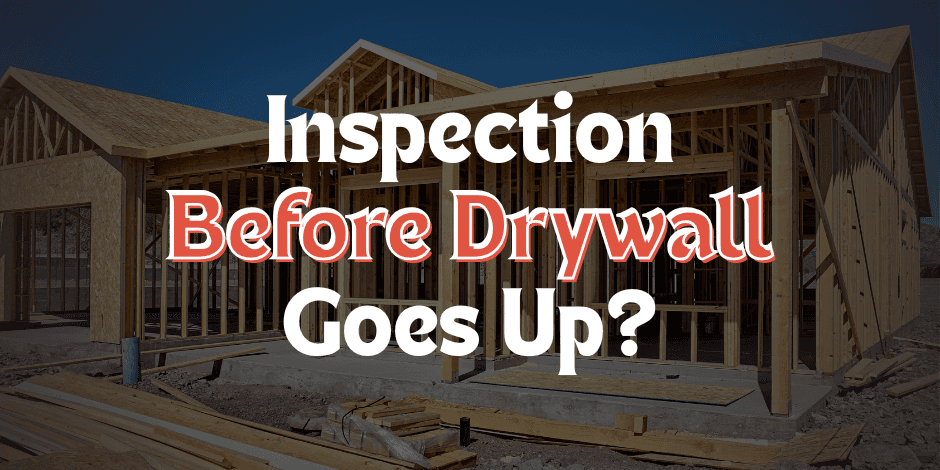
The pre-drywall stage represents the single most transparent window into how a new home is being built. Once insulation and drywall are installed, the structural and mechanical systems that define a home's long-term performance become largely inaccessible - and significantly more expensive to address if problems emerge later.
Understanding the Pre-Drywall Inspection Process
A pre-drywall inspection is conducted by an independent home inspector after framing and rough-in work - electrical, plumbing, and HVAC - have been completed, but before insulation and drywall are installed. This timing is deliberate: it provides the broadest possible view of the home's internal systems before they are enclosed within finished surfaces.
The evaluation goes beyond visual observation. An experienced inspector is assessing whether the systems installed are positioned correctly, meet quality benchmarks, and align with best practices for construction - not merely whether they satisfy the minimum requirements of local code.
Among the most frequently identified concerns during pre-drywall inspections:
Structural and framing deficiencies - missing hardware, improper spans, or framing inconsistencies that affect long-term structural performance
Electrical installation issues - unsafe wiring configurations, grounding problems, or placements that create future access difficulties
Plumbing concerns - improperly sloped drain lines, unsecured pipes, or connections that carry a risk of failure behind finished walls
HVAC and mechanical problems - duct installation issues, improper equipment placement, or system designs that will underperform in finished condition
Envelope and moisture management gaps - flashing deficiencies, air sealing omissions, or weatherproofing issues that affect both energy efficiency and long-term durability
Workmanship quality concerns - items that may technically meet code minimums but that fall below accepted quality standards
The majority of these findings are addressable when caught early. The same issues identified after drywall installation typically require far more invasive - and costly - remediation.
How Independent Inspections Differ from Municipal Inspections
A common point of confusion among new construction buyers involves the relationship between city-required inspections and independent pre-drywall inspections.
Municipal inspections are a critical component of the building process. They confirm compliance with applicable building codes at defined checkpoints. However, city inspectors are typically responsible for a high volume of projects and are operating within structured, time-limited review windows. Their mandate is code compliance - not a comprehensive buyer-centered evaluation.
An independent pre-drywall inspection is fundamentally different in scope and objective. The inspector is working on behalf of the buyer, evaluating the home holistically rather than against a compliance checklist. This may surface items that technically satisfy code requirements but that warrant attention from a quality, performance, or long-term value standpoint.
For buyers in an active market like Austin, this distinction is meaningful. The two types of inspection are not redundant - they are complementary.
Why Austin's Growth Elevates the Importance of This Step
Austin's position as one of the country's fastest-growing housing markets is a testament to the region's continued appeal. Growth at this scale, however, places real demands on the construction industry - in terms of labor, scheduling, and quality oversight.
Buyers who commission an independent pre-drywall inspection gain visibility into their home at the stage where the most actionable information is available. It is not about approaching the builder with adversarial expectations - it is about making a fully informed purchase decision before the opportunity to observe the home's systems disappears behind finished walls.
This approach to informed decision-making aligns directly with the guidance Mueller Residential Group consistently offers to buyers navigating Austin's new construction landscape. Understanding what you're buying - structurally, mechanically, and from a quality standpoint - is simply good practice in any market. In a market growing as rapidly as Austin's, it's essential.
Conclusion
New construction remains one of the most compelling paths to homeownership in Austin's competitive market environment. Buyers who take advantage of the pre-drywall inspection stage, however, enter the homeownership experience with a level of clarity and confidence that those who skip this step simply don't have.
The investment is modest relative to the cost of the home. The information it provides is irreplaceable once construction advances beyond this stage.
For buyers exploring new construction opportunities in Austin or the Mueller neighborhood, Mueller Residential Group offers the local expertise and builder-specific knowledge needed to navigate every phase of the process with confidence.
FAQ: Pre-Drywall Inspections for Austin New Construction Buyers
Q: What is a pre-drywall inspection and why does it matter? A: A pre-drywall inspection is an independent evaluation of a new construction home conducted after framing and rough-in work (electrical, plumbing, HVAC) are complete - and before insulation and drywall are installed. It provides buyers with an unobstructed view of the home's core systems at the stage where corrections are most efficient and cost-effective.
Q: Are pre-drywall inspections required for new construction in Texas? A: They are not legally required. However, given the pace and scale of Austin's construction environment, an independent pre-drywall inspection is strongly advisable for any buyer purchasing a new construction home in the area.
Q: Don't city inspections already verify the construction quality? A: Municipal inspections confirm that construction meets minimum code requirements at designated checkpoints. They are an important safeguard, but they are not designed to provide the depth of buyer-focused evaluation that an independent inspector delivers. The two serve different functions and are best viewed as complementary.
Q: When in the construction timeline should this inspection be scheduled? A: After framing, electrical rough-in, plumbing rough-in, and HVAC rough-in are complete - but before insulation and drywall are installed. Coordinating this window with the builder's construction schedule is essential, and an experienced real estate agent familiar with new construction can assist with that process.
Q: What kinds of issues are most commonly found? A: Inspectors frequently identify framing deficiencies, electrical wiring concerns, plumbing installation issues, HVAC system problems, moisture management and weatherproofing gaps, and general workmanship items. Most are straightforward to address at this stage; many become significantly more complex once drywall is in place.
Q: Does a pre-drywall inspection replace a final new construction inspection? A: No. Each addresses different aspects of the completed home. The pre-drywall inspection focuses on internal systems while fully accessible; the final inspection evaluates the finished home. Both are advisable for comprehensive buyer protection.
Q: How does Austin's market growth factor into this recommendation? A: Rapid growth creates pressure on builders to deliver at high volume and pace. While reputable builders maintain quality standards, the complexity of managing multiple projects simultaneously increases the statistical likelihood of oversights. An independent inspection provides a buyer-specific quality review at the most informative stage of construction.
Q: What is the typical cost of a pre-drywall inspection? A: Fees generally range from $300 to $600 depending on the size of the home and the inspector. This is a relatively modest expense in the context of a new home purchase - and substantially less than the cost of remediation for issues discovered after drywall installation.